

Janaysia Resse (2L) brings a strong commitment to advocacy and strategic thinking to her legal journey. Following her summer internship at Merck, she continues to build on her interests in corporate law and public impact, drawing on her background in education, business, and her experience as a LEO Fellow.
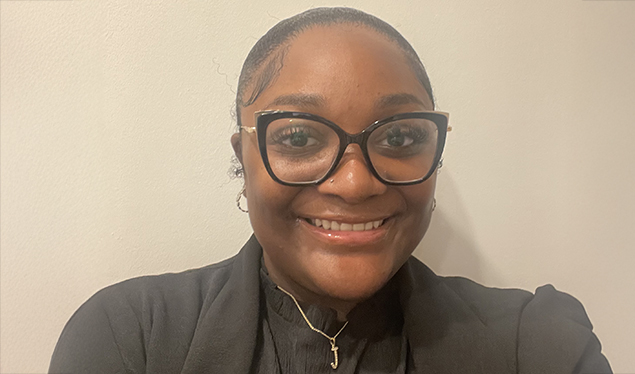
What initially drew you to pursue a legal education, and what ultimately led you to Seton Hall Law?
I was drawn to law because I saw firsthand how legal systems—and the lack of access to them—shape people’s lives. Before law school, I worked in education and local government in Camden, New Jersey, where I witnessed systemic inequities affecting students, families, and communities. I wanted the tools to advocate more effectively and to be part of the decision-making process, not just the outcome.
Seton Hall Law stood out to me because of its strong commitment to access, service, and practical training. As a New Jersey native and first-generation college graduate and law student, the LEO program and Seton Hall’s emphasis on real-world readiness made it feel like the right place to grow both personally and professionally.
As a LEO Fellow, how has the program shaped your law school experience both academically and professionally?
The LEO program has been foundational to my law school experience. Academically, it provided early structure, mentorship, and skill-building that helped me transition into the rigor of law school. Professionally, LEO created a strong support system and a network of peers, faculty, and alumni who genuinely want to see you succeed.
Beyond academics, LEO taught me how to advocate for myself, seek out opportunities, and stay resilient when things feel challenging. It has helped me view law school not just as coursework, but as long-term professional development. Personally, LEO is a family, and I am exceedingly grateful for the program and what it has taught me throughout this journey.
Can you share more about your summer internship at Merck and what your role involved?
This past summer, I worked as a legal intern in Merck’s Legal Department, specifically in the Alliance Management group. I supported attorneys across several practice areas, including employee benefits and compensation, data privacy, real estate, and pro bono initiatives. My work included reviewing and analyzing contracts, assisting with research related to licensing and real estate matters, and helping address questions from internal business clients.
The experience gave me meaningful exposure to how legal strategy supports large-scale business operations, and I appreciated being trusted with substantive work rather than purely administrative tasks.
What were one or two key skills or lessons you gained from your experience working in a corporate legal environment?
One key skill I gained was learning how to communicate legal concepts clearly and efficiently to non-lawyers. Corporate legal work requires precision, but also practicality—understanding business objectives while managing legal risk.
I also learned the importance of collaboration. Legal decisions are rarely made in isolation, and working alongside professionals from different departments reinforced how essential teamwork and professional judgment are in a corporate setting.
How has your background in business administration and marketing influenced the way you approach legal studies or professional opportunities?
My background in business administration and marketing has shaped how I think strategically. I naturally consider the “why” behind decisions, the audience involved, and the broader implications of legal outcomes.
In law school, this has helped me approach legal problems with both analytical and practical lenses, thinking not just about what the law says, but how it will function in real-world settings. Professionally, it has allowed me to connect legal analysis to business and organizational goals.
Before law school, you worked extensively in education and student support roles. How have those experiences impacted your perspective as a law student?
Working in education grounded me in empathy and purpose. I saw how policies, funding decisions, and legal frameworks directly affect students and families, particularly in under-resourced communities.
As a law student, those experiences remind me why the work matters. They push me to stay people-focused, think about impact, and remain committed to advocacy—especially for those who may not always have access to legal resources.
What has been the most challenging aspect of law school so far, and how have you navigated it?
One of the most challenging aspects has been adjusting to the curve and learning how to measure success differently than I had before. Law school demands resilience, adaptability, and patience.
I’ve navigated this by leaning on my support systems, refining my study strategies, and reminding myself that growth is not always linear. Each semester has taught me how to work smarter, advocate for myself, and stay focused on long-term goals.
What has been one of the most rewarding moments of your law school journey to date?
One of the most rewarding moments has been seeing my professional growth recognized, particularly through my summer internship and mentorship relationships. Knowing that attorneys trusted my judgment and valued my contributions reaffirmed that I belong in this profession.
Additionally, continuing to progress academically has been deeply validating and motivating.
What advice would you give to current or prospective LEO students who are considering law school?
My advice would be to trust your journey and use every resource available to you. Law school can be challenging, but programs like LEO exist to support you—not just academically, but holistically.
Ask questions, seek mentorship early, and don’t be afraid to advocate for yourself. Your background and lived experiences are strengths, not obstacles.
When you’re not studying or working, how do you like to unwind and maintain balance?
When I’m not studying, I enjoy traveling, listening to music, painting, journaling, and spending time with loved ones. I also prioritize rest and mindfulness practices to stay grounded.
Maintaining balance has been essential for me—it helps me show up more focused, motivated, and present both in law school and in life.


