

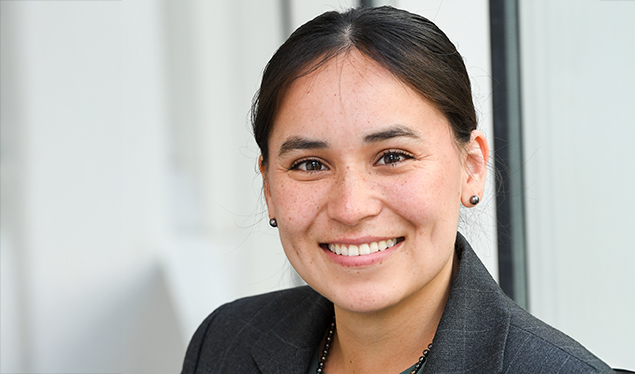
Karina Rosalez (2L) brings a public-service-driven perspective to her legal studies. Originally from California, she spent last summer interning with the California Courts of Appeal, Fourth District, where she helped draft opinions and gained firsthand insight into appellate decision-making, judicial process, and the power of representation in the law.
Can you share a bit about your path to law school and what inspired you to pursue a legal career?
The idea of becoming a lawyer was reignited during my time in undergrad, when I realized how impactful the legal system is on the public. I wanted to work before going to law school, and after two years in public service, I applied. I knew that as a lawyer, I would have the opportunity to be in spaces where I was historically excluded.
How has being a LEO Fellow shaped your experience here at Seton Hall Law?
Becoming a LEO Fellow is one of the best decisions I have made; it has been above and beyond my expectations. The program is meant to prepare students like me, who have little to no knowledge about the ins and outs of becoming a lawyer. Being a LEO Fellow gave me a strong sense of community before my first day of classes. It created a sense of belonging and provided me with people I knew I could lean on when I needed help.
This summer you interned with the California Courts of Appeal—what was the most interesting or memorable part of that experience?
It was exciting to be the one drafting real court opinions; it gave me a new perspective and a greater appreciation for the behind-the-scenes work of the court. The most memorable part of the experience was that a case I worked on is getting published.
Coming from California to New Jersey, what’s been the biggest adjustment for you (and have you found a good taco spot yet)?
The sunsets. The city has its own beauty when the sun sets on it, which I’ve grown to appreciate. As for Mexican food—California is superior. You just can’t beat the handmade tortillas out there. That said, I’ve found El Rincon in Kearny to be a great spot to curb my cravings. I love their tacos de lengua and horchata!
You’ve held leadership roles in a variety of organizations—what have those experiences taught you about collaboration and advocacy?
Communication is key when working collaboratively; it’s crucial to be honest about your capacity and to know when to ask for help. As for advocacy, I believe it’s difficult to advocate for others when you’re not taking care of yourself. To be an effective advocate, you need to be proactive, disciplined, and resilient. That entails having a plan and following through on it, as well as having backup plans and the ability to stay composed and adapt in the face of adversity. Collaboration and advocacy can lead to uncomfortable situations, and I’ve learned the importance of being comfortable in those moments.
How has your background in public health influenced the way you think about law and policy?
The heart of public health is preventative care, which is often the opposite of the legal system, but the two fields are inseparable. I frequently think about how laws and policies will impact the public and in what way. Who benefits? Who is harmed? Who will be impacted the most? How can this precedent be used in the future? Law is similar to public health because at times it can feel like your hands are tied; however, my background in public health taught me that small changes make a huge difference. The law functions the same way, with every judgment building on the last and future lawyers using past precedents to shape what comes next.
What advice would you give to incoming LEO Fellows about making the most of their first year?
Stay curious and always ask questions. Law school is intimidating for many reasons, but never let that stop you from getting the most out of this experience. Savor your time here, try everything you can, and connect with as many people as possible. Take up space—you deserve to be here.
Is there a particular case, project, or moment from your internship that reaffirmed your decision to go to law school?
I knew coming into law school that Latina representation was low, but it really sank in when I was having lunch with Justice Delaney and he told me how rare it is to cross paths with Latina lawyers. I’m happy to see more Latinas entering the legal field and even more grateful to Justice Sanchez for having two future Latina lawyers, because representation alone will inspire the next generation to pursue law school.
Looking ahead, what are your goals after graduation, and how do you see your unique background shaping your career path?
My goal after graduation is to find a field that challenges me and is constantly evolving. I’m still figuring out which area of law that is, but I’m strongly considering a judicial clerkship because I thoroughly enjoyed my time at the California Court of Appeal.
Just for fun—what’s one book, hobby, or food you think everyone should try at least once?
Running a marathon—or running in general. It’s one of the most accessible sports and builds character. Bonus: it’s great for your health. 🙂


