

Wagma Isaczai (2L) brings a truly global perspective to her legal studies. Having lived in eight countries and traveled to 43, she draws on her background as the daughter of a UN diplomat and her work with the NYS Division of Human Rights to pursue a career in international law and human rights.
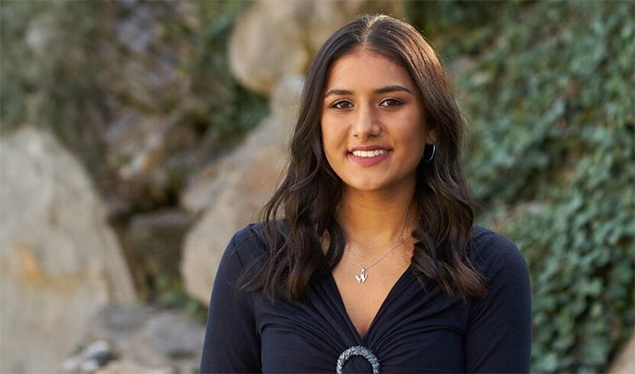
What inspired you to pursue both law and diplomacy, and how did those interests develop?
My inspiration for pursuing law and diplomacy comes directly from my upbringing as the daughter of a UN diplomat and my identity as an Afghan woman. Growing up in countries such as Syria, Yemen, Afghanistan, Pakistan, Nepal, Germany, Azerbaijan, and even North Korea, I saw how diplomacy and law directly affected people’s daily lives. I often felt like I was living in a safe bubble, shielded from the harms and human rights abuses others around me faced, which instilled in me a deep sense of responsibility to act.
When the Taliban returned to power in Afghanistan in 2021, I witnessed firsthand how quickly Afghan women’s rights—including access to education, work, and basic freedoms—were dismantled. That moment solidified my resolve to use law not just as a career, but as a tool to advocate for the rights of Afghan women. Initially, I thought a master’s in diplomacy and international relations would be part of my path. Over the last year, I realized that the law provides a concrete tool to bring accountability, enforce rights, and create meaningful change. That’s why I chose to focus on law and plan to pursue an LLM in Europe, so I can combine my global background with rigorous legal training to advocate for vulnerable populations in international courts.
How did your summer with the NYS Division of Human Rights shape your understanding of human rights advocacy?
My work at the New York State Division of Human Rights revealed how human rights issues in the U.S. differ from those I had seen in other countries. While I often associated human rights abroad with extreme violations such as forced labor, displacement, and war crimes, in New York I saw them expressed through everyday issues like discrimination in housing, employment, and public accommodations—issues that are equally essential to building a just society.
Witnessing homelessness in New York also reminded me of some of the most basic human rights violations I had seen abroad, as many minorities here still lack access to food, water, and stable housing. This showed me that these fundamental rights remain unfulfilled even in one of the wealthiest cities in the world.
Working with Chief ALJ Licet Gaveau and Deputy ALJ Alexander Linzer, I drafted recommended orders for the Commissioner, including one case involving a nurse who was fired after taking maternity leave. As an Afghan woman, I could not ignore the irony that in Afghanistan women are denied education and the ability to work entirely, while in Denmark—where I also spent significant time—progressive parental leave policies provide real gender equality. That case reminded me that women’s rights remain fragile everywhere and highlighted the gap between U.S. policy and what true gender equity looks like globally. Especially now, when women’s rights protections face new challenges even in democratic systems, I want to help lay the groundwork to defend both domestic and international legal frameworks.
Can you share how your international upbringing and travels have influenced your perspective on the law?
Having lived in eight different countries, I have seen the law used both as a weapon of oppression and as a means of protection.
In North Korea, I felt safe not because of freedom or trust, but because the country’s oppression forced people into submission. The law functioned as an instrument of control, with constant surveillance and intimidation to ensure obedience. I remember how we could leave the car unlocked with the keys inside, and no one would dare to steal it because the consequences were unthinkable. Ironically, I felt less afraid of breaking rules there because it was nearly impossible to do so.
In contrast, in Germany I experienced a system built on trust. On public trains, there are no turnstiles because the government trusts individuals to pay their fare. Ironically, I felt more nervous about breaking rules in Germany than in North Korea because the system relied on my integrity rather than fear. This contrast revealed how differently the concept of “rule of law” can operate—and how true rule of law must uphold justice without infringing on basic rights and freedoms.
In Afghanistan, I saw human rights abuses and displacement on a massive scale, while my diplomatic status insulated me from those same realities. In Nepal, I saw the impact of caste-based exclusion. In Germany, I witnessed migrants struggling for belonging during the refugee crisis. In Azerbaijan, I observed corruption, indoctrination, and stark socioeconomic inequality, alongside efforts to lift large portions of the population out of poverty and maintain a secular society. Even in the U.S., after 9/11, I experienced discrimination that forced me to hide my Afghan identity. These experiences showed me how law can either protect or oppress and solidified my determination to use it as a tool for justice.
My upbringing gave me a global lens, but my identity as an Afghan woman gave me a deeply personal stake in the struggle for human rights. I know I could just as easily have been one of the girls now banned from school in Afghanistan. Instead, I was given the opportunity to pursue my education freely, with the purpose of using my voice for those who are silenced.
Of the eight countries you’ve lived in, which had the most profound impact on you, and why?
Living in North Korea for three summers had the most profound impact on me. I remember standing before the wax figure of Kim Il-Sung at the Gift Museum and refusing to bow, even as my father’s assistant wept with admiration. I had been raised never to bow to another human because we are all equal, and that lesson guided my response. It made me realize how deeply propaganda can indoctrinate people and how symbolic gestures are used to enforce loyalty and suppress dissent.
Daily life reinforced this reality. Our house was bugged, our movements monitored, and even grocery trips were reported. It felt suffocating, but unlike North Koreans, I knew I could eventually leave. That awareness created both guilt and responsibility. Over time, frustration turned into empathy. I came to see North Koreans not as complicit, but as victims of their government. This experience reshaped my understanding of advocacy and taught me that injustice must be challenged through tools like international law.
What’s been your most memorable professional or academic experience so far?
My internship at the United Nations Office of the High Commissioner for Human Rights in Azerbaijan was a turning point. I realized I was the only female in the office besides the receptionist. Many male lawyers were providing free legal assistance to women seeking divorce due to abuse and domestic violence. Witnessing both internal gender disparities and systemic violence against women reinforced my commitment to human rights law.
Additionally, my advocacy in Washington, D.C. during the fall of Kabul in 2021 deepened this commitment. As president of the Afghan Student Association at American University, I organized donation drives, co-produced a film on Afghan refugees, and wrote to Secretary of State Antony Blinken urging evacuation for Afghan students and professors. These experiences showed me how legal advocacy, diplomacy, and grassroots organizing intersect to protect human rights.
How do you see your background in both law and diplomacy influencing your future career path?
My background in diplomacy gives me cultural fluency and a broad understanding of international institutions. My legal training will give me the tools to hold individuals and governments accountable. I am passionate about preserving a rule-based world order, especially as international humanitarian and human rights law face increasing violations. I aspire to work in international courts such as the ICC, ICJ, or European Court of Human Rights, where law and diplomacy converge.
You’ve already worked with major international organizations—what lessons have you taken from those experiences?
The most important lessons have been empathy and patience. Human rights work requires connecting with people across cultures, often in crisis. Change rarely comes quickly, and persistence is essential. I also learned that violations often persist due to lack of awareness, which drives my commitment to public education on constitutional and universal rights.
What advice would you give to fellow students who want to work in human rights or international law?
Immerse yourself in opportunities and engage with communities directly. At Seton Hall Law, I am working to reinstate the International Law Association, and I encourage students to join. I also urge students to engage with diverse viewpoints, travel if possible, and approach this work with humility and gratitude.
Are you leaning toward focusing solely on your JD, or do you see an LLM in your future?
I hope to pursue an LLM abroad, most likely in Europe. Combining my JD with a European LLM will give me a comparative perspective essential for international advocacy. I also see myself returning abroad, continuing the nomadic lifestyle that shaped my worldview.
Outside of academics, what passions or hobbies help you recharge and stay balanced?
Traveling is my greatest passion. I also enjoy learning languages, exploring new cuisines, and playing tennis—often with my dad. These activities keep me grounded, focused, and energized for demanding academic and professional goals.


