Across seven decades, the places Seton Hall School of Law has called home tell the
story of its evolution into a modern legal institution — from its 1951 founding through
its landmark campus at One Newark Center.
Location 1: 40 Journal Square, Jersey City, N.J., February 1951 – September 1951
Dean: Miriam T. Rooney
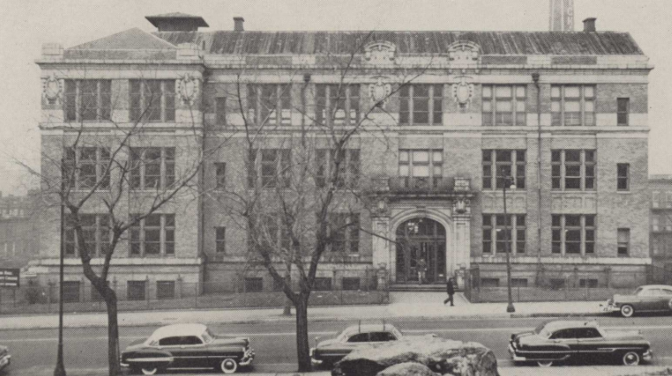
On Feb. 5, 1951, Seton Hall University School of Law opened at 40 Journal Square in Jersey City, the former site of John Marshall Law School, with an entering class of 72 students — 16 full time and 56 part time. The university acquired the site and assets through a donation agreement after John Marshall Law School was forced to close when the New Jersey Supreme Court adopted rules requiring bar candidates to hold degrees from American Bar Association-accredited institutions. Under the agreement, Seton Hall agreed to maintain and administer the academic records of John Marshall graduates.
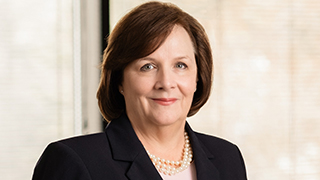
The law school's founding dean, Miriam T. Rooney, was a historic figure — the first woman to lead an ABA-accredited law school in the United States. The stay at Journal Square was brief, lasting only about seven months before the school relocated to Newark.
 Location 2: Newark, N.J. (early campus), September 1951 – early 1970s
Deans: Miriam T. Rooney (1951–1961); John P. Loftus (1961–1971)
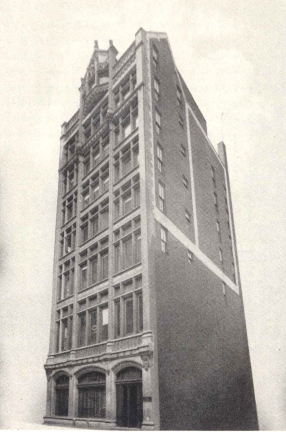
In September 1951, the law school moved from Jersey City to Newark, and in 1954 graduated its first class. The following year, full ABA accreditation was granted, and in 1959 the law school became a member of the Association of American Law Schools. The exact street address of this early Newark location is not widely documented in public records, but the school remained in Newark and grew significantly during this period. As enrollment grew to more than 300 students, Dean Rooney worked tirelessly to build the library collection and to upgrade faculty salaries.
In the summer of 1961, Dean Rooney returned to teaching full time and was succeeded by John P. Loftus. During Loftus' tenure, the student body expanded to nearly 1,000 students, and students established the Student Bar Association, the Law Review and the student newspaper, Res Ipsa Loquitur.
Location 3: 1010 Raymond Blvd., Newark, N.J., Early 1970s – 1991
Deans: John P. Loftus (through August 1971); John F.X. Irving (1971–1978); the Rev.
Daniel A. Degnan (1978–1983); Elizabeth F. Defeis (1983–1988); Ronald J. Riccio (1988–1991)
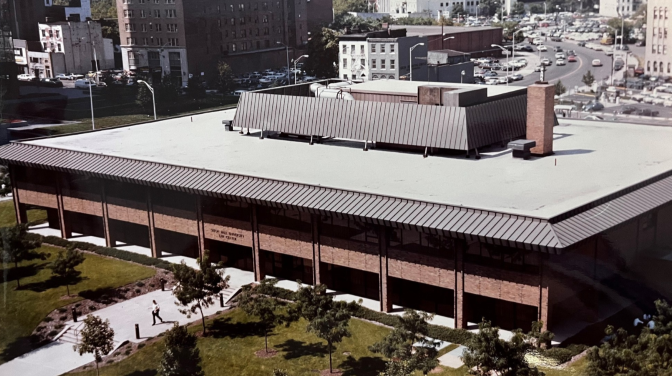
When Dean John Loftus retired in August 1971, John F.X. Irving was hired with a mandate to improve the school's physical facilities and expand the faculty. Under his leadership, the law school moved to 1010 Raymond Blvd. in Newark, and the number of faculty members nearly tripled.
In the fall of 1978, the Rev. Daniel A. Degnan succeeded Dean Irving, placing particular emphasis on alumni relations and establishing the Alumni Office and the Alumni Council. When Degnan's tenure ended in June 1983, he was succeeded by Elizabeth F. Defeis, who served until June 1988 and during whose tenure the school's scholarly reputation grew considerably. The Raymond Boulevard building ultimately proved inadequate for a law school of Seton Hall's size. In July 1988, Ronald J. Riccio took the helm and began making arrangements to build a new facility, leading the school into its next chapter.
Location 4: One Newark Center, 1109 Raymond Blvd., Newark, N.J., 1991 – Present
Deans: Ronald J. Riccio (1988–1999); Patrick E. Hobbs (1999–2015); Kathleen M. Boozang
(2015 – 2023); John Kip Cornwell, interim dean (2023 –2024). Current dean: Ronald
Weich (July 1, 2024 – present)
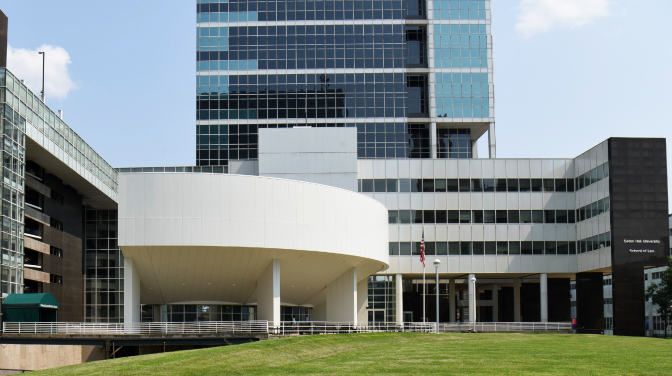
In July 1988, Dean Ronald J. Riccio secured financing for and began construction of a $37 million facility in the heart of Newark's business district, where Seton Hall Law School remains today. At One Newark Center, the law school is housed in a 22-story building completed in 1991. The Newark campus building provides 210,000 square feet of space, including a 65,000-square-foot library named for Congressman Peter W. Rodino Jr.
Located in downtown Newark, One Newark Center is one of the city's tallest buildings and a prominent fixture in the central business district. The school sits within the New York metropolitan corridor, just miles from Manhattan via the PATH train. It is conveniently situated two blocks west of Newark Penn Station, with easy access to the New Jersey Turnpike and Garden State Parkway.
At a time when other organizations and businesses were leaving Newark, Seton Hall Law School remained, playing a central role in the city's renewal while growing its reputation as one of the nation's finest law schools.
For more information, please contact:
Office of Communications and Marketing
(973) 642-8714
[email protected]