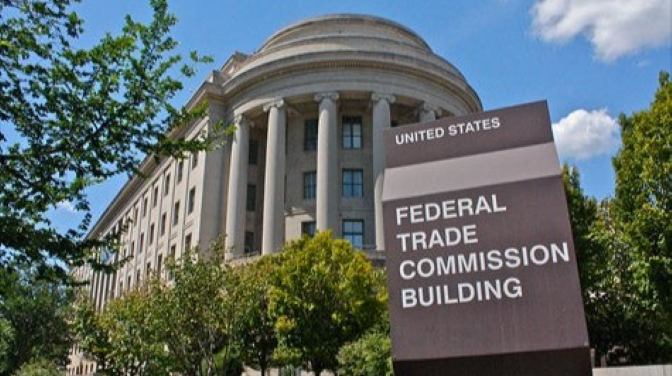
Law professor Marina Lao, former director of the Federal Trade Commission’s Office
of Policy Planning, argues the agency could use its Section 5 authority and rulemaking
powers more broadly to address gaps in conventional antitrust law.
As debate intensifies over whether traditional antitrust law is equipped to address
today’s economy, Seton Hall Law Professor Marina Lao is looking beyond the conventional
boundaries of the Sherman and Clayton acts.
In a keynote address at the 2026 Denver Law Review Antitrust Symposium, Lao examined
two tools she argues could help recalibrate antitrust enforcement without waiting
for Congress to act: the Federal Trade Commission’s (FTC) distinct competition authority
under Section 5 of the FTC Act and its authority to engage in competition rulemaking.
Her remarks, titled “The FTC’s Competition Mandate: Its Scope, and Potential Reach
Beyond Conventional Antitrust Doctrines,” are forthcoming in the Denver Law Review.
For law students learning the foundations of antitrust, Section 5 presents an important
distinction. While the Sherman Act and Clayton Act provide the traditional framework
for federal antitrust enforcement, Section 5 prohibits “unfair methods of competition,”
or UMC.
Lao argues that courts have for decades treated Section 5 as essentially coterminous
with the Sherman Act, limiting the FTC to established antitrust doctrines. She contends
that interpretation is inconsistent with the history and language of the FTC Act.
“There is little Section 5 competition law apart from the Sherman Act,” Lao said.
“This is where I think some changes would be desirable and possible.”
Congress created the FTC in 1914 after the Supreme Court’s landmark Standard Oil decision
applied the rule of reason to Sherman Act enforcement. Lao argues that Congress believed
the approach could leave some practices that harmed competition beyond the reach of
antitrust law. “Congress left no doubt whatsoever that Section 5 was designed to be
more expansive than the Sherman Act,” she said.
The FTC initially brought “standalone” Section 5 cases that did not depend on Sherman
Act theories. But after several appellate defeats in the 1970s, the agency largely
retreated from that approach and generally followed the courts’ interpretation of
conventional antitrust law. Lao argues that retreat was unwarranted and that the FTC
should reconsider the broader authority Congress gave it. “A strong case can be made
that Section 5 is not coterminous with the other principal antitrust laws,” she said.
“Its UMC mandate is distinct, and it provides an independent basis for liability for
anticompetitive conduct that may not otherwise violate the main antitrust laws.”
Lao’s second focus is competition rulemaking. She argues that case-by-case enforcement
is not always sufficient to address systemic or recurring competition problems. Section
6(g) of the FTC Act, she contends, gives the FTC rulemaking authority broad enough
to include substantive competition rules.
That authority is not unlimited. Lao acknowledges that the major questions doctrine,
which has become increasingly significant in administrative law, may constrain the
scope of rules the FTC can adopt. But she argues it does not categorically prevent
the agency from using competition rulemaking.
The broader antitrust debate provides the backdrop for both proposals. Lao points
to concerns about economic concentration, narrow approaches to dominant-firm conduct,
potential harms to workers and other market participants and the limits of relying
exclusively on enforcement after anticompetitive conduct has occurred.
For Lao, a broader reading of Section 5 and more robust use of rulemaking could give
the FTC additional tools to address those concerns while staying within its existing
statutory authority. “Section 5 could and should be read more expansively to reach
conduct that falls outside of the Sherman Act’s doctrinal boundaries and restrictive
confines,” she said.
Her conclusion is also a challenge to the agency: Use the authority Congress gave
the FTC more boldly, even when the outcome is uncertain. Bold agency action, she argues,
can inspire change and ultimately move antitrust law forward.
For more information, please contact:
Office of Communications and Marketing
(973) 642-8714
[email protected]