Thomas Healy has built a career at the intersection of journalism, law and academia.
His work shows why experience—not logic alone—shapes the law and sustains democracy.
In the classroom, he engages students in exploring what the law is for and whom it
should serve.
Before he became a law professor, Thomas Healy chased deadlines, not footnotes.
He began his career as a journalist, learning to ask tough questions and see complex issues from multiple perspectives. That curiosity eventually led him to Columbia Law School, where he could examine the law itself and its impact on society.
After law school, Healy briefly returned to journalism, covering the U.S. Supreme Court for The Baltimore Sun—a role he had once envisioned as his dream job. He soon realized that daily reporting had limits. Drawn to the deeper questions of law and society, he transitioned to appellate practice in Washington, D.C., before eventually finding his professional home in academia.
“I knew I was interested in public policy, government and history,” Healy said. “What I didn’t know was whether I would pursue those interests as a journalist, a lawyer or an academic. As it turns out, I tried all three.”
Healy credits journalism with sharpening his approach to law, but law school gave him space to think critically and weigh in more directly. “The most important skill you need in both journalism and law is the ability to question your premises and really understand a situation from all perspectives,” he said.
That perspective is central to Healy’s scholarship, including his book The Great Dissent. In it, he explores Justice Oliver Wendell Holmes Jr.’s late-in-life embrace of free speech—a principle Holmes had long considered logically indefensible until age 78. Healy examines not just judicial opinions, but Holmes’ personal life and the social forces shaping him during an 18-month period after World War I.
“Holmes, more than any other legal thinker, emphasized that law emerges out of people’s experiences,” Healy said. “Law is not math.”
"The life of the law has not been logic; it has been experience."
Oliver Wendell Holmes Jr.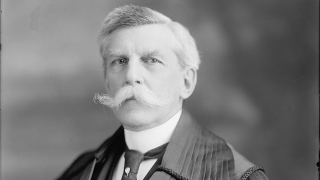
For Healy, dissent is not an abstract courtroom concept; it is a cornerstone of democracy. “Without the ability to challenge the government, without the ability to disagree with our fellow citizens, we really wouldn’t have a democracy,” he said.
Healy’s second book, Soul City, explores another facet of law’s societal role. It tells the story of a planned community in rural North Carolina, spearheaded by civil rights leader Floyd McKissick, designed to address racial and economic inequality.
“It was an audacious dream—an attempt to build a city from scratch to create opportunity where it had long been denied,” Healy said. Though the project ultimately collapsed under economic and political pressures, it revealed deep societal resistance, even from some white liberals who, while supporting integration, viewed Soul City as separatist.
As Black History Month invites reflection on progress and unfinished work, Healy sees “Soul City” as a reminder that confronting structural inequality often requires bold, imaginative solutions—even when misunderstood or resisted.
In the classroom, Healy encourages students to look beyond doctrine and precedent and ask what the law is actually for. “Law is a framework for a society to flourish,” he said. For students eager to change the world, he offers a counterintuitive lesson: the deeper you go, the more complex the law becomes. “Being a lawyer—and being a citizen—is about grappling with a changing world and being comfortable with the fact that we won’t always have the answers.”
When students worry about choosing the “right” career path, Healy shares insight from his own journey: “There are many ways to achieve your goals. The key is to enjoy the process of getting there as much as the destination itself.”
What gives him hope is the mindset of today’s law students. “They don’t come in thinking they know everything,” he said. “They come in wanting to learn and wanting to make a difference. That gives me real optimism for the future.”
For more information, please contact:
Office of Communications and Marketing
(973) 642-8714
[email protected]